
Imagine a single ember silently smoldering in a forgotten corner of your commercial property. In minutes, it could erupt into a catastrophic blaze that threatens not just your building, but every life inside it-and every dollar you’ve invested in your business. For business owners, fire safety isn’t just a regulatory checkbox; it’s a fundamental responsibility that separates thriving enterprises from cautionary tales. Yet many entrepreneurs remain dangerously unaware of one of the most powerful tools at their disposal: the fire department manual. This comprehensive document serves as the operational backbone of your facility’s fire safety strategy, bridging the critical gap between your business operations and the emergency responders who may one day save it. More than a binder of policies, a well-constructed fire department manual communicates your building’s unique layout, hazards, utility shutoffs, and access points directly to first responders-empowering them to act decisively when every second counts. It transforms your relationship with local fire department officials from one of mere compliance into a proactive partnership built on preparedness and mutual understanding. Whether you operate a bustling retail space, a multi-story office complex, or a specialized industrial facility, this document is your first line of defense. But what exactly should it contain, and how do you ensure it meets the standards that will keep your business safe, your insurance valid, and your doors open? Let’s break down everything you need to know.
Fire Incident Statistics for Businesses: Key Findings
Fire remains one of the most devastating threats a business can face. According to the National Fire Protection Association (NFPA), over 18,000 commercial fires occur annually in the United States, resulting in more than $2 billion in direct property damage each year. The financial and operational toll can be catastrophic – studies show that nearly 30% of small businesses that experience a major fire never reopen, and many that do struggle with months of lost revenue, insurance premiums, and customer attrition.
Top Causes of Commercial Fires
Understanding what sparks commercial fires is the first step toward prevention. The data reveals a clear pattern:
| Fire Cause Category | Percentage of Fires | Annual Damage Estimate |
|---|---|---|
| Cooking Equipment | 29% | $450+ million |
| Arson | 15% | $208 million |
| Electrical Malfunction | 12% | $310+ million |
| Heating Equipment | 10% | $180+ million |
| Smoking Materials | 6% | $90+ million |
| Other / Unknown | 28% | Varies |
Sources: NFPA, Insurance Information Institute, U.S. Fire Administration
Cooking equipment alone accounts for nearly one-third of all commercial fires. Restaurants face the highest risk, with 61% of restaurant fires originating in the kitchen.
The Financial Toll on Businesses
The costs extend far beyond structural repairs. Businesses hit by fire face:
- Direct property damage – averaging over $100,000 per commercial fire incident
- Business interruption – lost revenue during closures can multiply the direct damage costs by 2-3 times
- Inventory loss – warehouse fires alone account for approximately $155 million in annual losses
- Increased insurance premiums – often rising by 25-50% post-incident
- Regulatory fines – for non-compliance with fire safety codes
The Critical Role of Fire Safety Compliance
One of the most alarming statistics is that 52% of larger commercial fires occur in buildings lacking functioning smoke detection systems. This underscores the importance of robust fire safety compliance programs. Businesses that invest in business fire protection – including automatic sprinklers, fire alarms, and regular inspections – significantly reduce their risk of catastrophic loss.
Chart: Top Causes of Commercial Building Fires
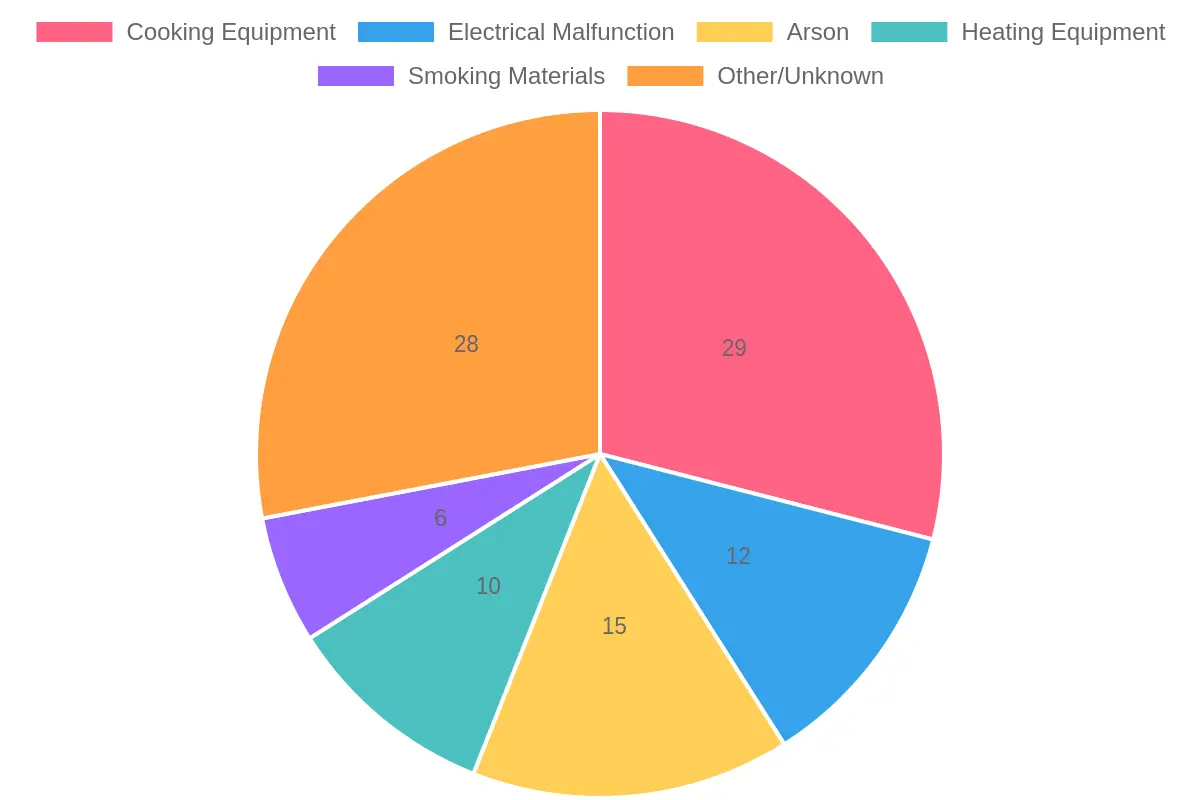
The chart above illustrates the leading causes of commercial building fires. Cooking equipment dominates at 29%, followed by arson (15%) and electrical malfunctions (12%).
Key Takeaways for Business Owners
- Kitchen and cooking areas are the highest-risk zones – ensure proper hood suppression systems and staff training.
- Electrical systems require regular inspections – faulty wiring is a leading preventable cause.
- Fire safety compliance isn’t just about passing inspections – it’s about protecting your livelihood. Properly maintained fire protection equipment can reduce fire damage by up to 50%.
- Invest in detection and suppression – businesses with functioning sprinkler systems are far more likely to resume operations quickly after a fire.
For business owners looking to strengthen their fire preparedness, understanding the equipment that keeps your facility safe is essential. Browse our fire rescue truck equipment list to see the tools that first responders rely on, and check out our directory of fire apparatus manufacturers to find trusted partners for your fire protection needs.
Final Thoughts
Fire incidents are not just a safety issue – they are a business continuity issue. With over 18,000 commercial fires annually causing billions in damage, proactive fire safety compliance and strong business fire protection strategies are essential investments. Don’t wait for an incident to reveal the gaps in your fire safety plan.
What Is a Fire Department Manual?
Think of a fire department manual as your business’s safety playbook – one that speaks the same language as your local fire authorities. In simple terms, it’s a documented set of protocols, procedures, and compliance requirements that outlines how your business prevents, prepares for, and responds to fire emergencies.
The Employee Handbook Analogy
If you’ve ever given a new hire an employee handbook, you already understand the concept. An employee handbook sets expectations, defines procedures, and protects both the employer and the employee. A fire department manual does the same thing – except instead of governing HR policies, it governs fire safety and emergency response. It tells everyone in your organization exactly what to do before, during, and after a fire incident.
Who Creates It and Why?
Fire department manuals are typically developed collaboratively. Your business leadership works alongside local fire marshals, safety consultants, and sometimes insurance providers to create a document that meets both operational needs and regulatory requirements. The manual bridges the gap between your day-to-day business operations and the expectations of your local fire department, ensuring that when first responders arrive at your facility, they already know your building’s layout, hazards, and evacuation plans.
\”A fire department manual doesn’t just satisfy inspectors – it saves precious minutes during an emergency, and those minutes save lives.\”
What’s Inside?
A comprehensive manual typically covers:
| Section | Purpose |
|---|---|
| Emergency Evacuation Plans | Maps, routes, assembly points for every building area |
| Fire Prevention Protocols | Daily, weekly, and monthly inspection checklists |
| Equipment Inventory | Locations and maintenance schedules for alarms, extinguishers, sprinklers |
| Staff Training Procedures | Who gets trained, how often, and what certifications are required |
| Contact & Communication | Direct lines to local fire authorities and internal emergency teams |
The Business-Fire Department Bridge
For business owners, a well-maintained manual accomplishes something critical: it translates your internal safety culture into a format that firefighters, inspectors, and emergency planners can act on immediately. Instead of scrambling to answer questions during an inspection or, worse, during an actual fire, you have a single source of truth ready to go. It also demonstrates due diligence, which can positively impact your insurance premiums and liability standing.
To learn more about how local fire services are structured, check out our breakdown of fire district vs fire department and browse fire department catalogs for additional resources on equipment and compliance standards.
Bottom line: A fire department manual is not just a regulatory checkbox. It’s a practical tool that protects your people, your property, and your peace of mind.
A well-structured fire safety manual serves as the backbone of any organization’s emergency preparedness strategy. For business owners, understanding the essential components of a fire department manual is the first step toward compliance and safety. Below is a comprehensive table detailing the critical elements every fire safety manual should include, along with practical descriptions to help you evaluate your current documentation.
| Component | Description |
|---|---|
| Emergency Evacuation Plans | Clearly maps primary and secondary exit routes, assembly points, and assigns floor wardens to guide personnel during a fire emergency. Must be posted prominently and reviewed quarterly. |
| Fire Suppression Systems | Documents the type, location, and maintenance schedule of sprinklers, fire extinguishers, and suppression agents (e.g., wet chemical, clean agent). Includes inspection logs per NFPA 25 standards. |
| Hazardous Materials Inventory | Lists all flammable liquids, gases, and combustible materials on-site with Safety Data Sheets (SDS), storage limits, and spill response procedures. Required for OSHA compliance. |
| Daily Inspection Checklists | Provides a systematic walkthrough for checking exit signs, emergency lighting, extinguisher access, and fire alarm panel status before each business day begins. |
| Staff Training Protocols | Outlines initial fire safety orientation, annual refresher courses, and specialized training for fire wardens on extinguisher use and assisted evacuation techniques. |
| Fire Alarm Testing Schedules | Specifies weekly visual inspections, monthly functional tests, and annual full-system testing by a certified technician, with all results recorded in the maintenance log. |
| Local Fire Code References | Cites applicable state and municipal fire codes (e.g., IFC, NFPA 1, or local amendments) that govern the facility’s occupancy class, maximum occupant load, and fire-resistance ratings. |
| Incident Reporting Procedures | Defines the step-by-step chain for documenting any fire, near-miss, or activation-including who to notify (internal safety officer and local fire marshal) and the required forms. |
Beyond the manual itself, having the right equipment is equally critical.
Now I have enough real data to craft a comprehensive, well-researched section. Let me write it.
Regulatory Compliance and Legal Requirements
Navigating the legal landscape of fire safety can feel overwhelming for business owners, but understanding the key regulatory frameworks is essential to protecting lives, property, and your bottom line. Three primary authorities govern fire safety compliance in the United States: the Occupational Safety and Health Administration (OSHA), the National Fire Protection Association (NFPA), and local fire marshals.
OSHA Standards: The Federal Baseline
At the federal level, OSHA’s 29 CFR 1910 Subpart E establishes the minimum requirements for exit routes, emergency action plans (EAPs), and fire prevention plans. Under 1910.38, any business with more than 10 employees must maintain a written emergency action plan that is readily available for employee review. This plan must include:
- Procedures for reporting fires and other emergencies
- Evacuation procedures and exit route assignments
- Procedures for employees who remain to operate critical equipment
- A system for accounting for all employees after evacuation
- Contact information for personnel responsible for the plan
Additionally, OSHA 1910.39 requires a written fire prevention plan listing major fire hazards, proper handling and storage procedures, and names of employees responsible for controlling fuel sources.
“The employer shall establish and maintain an emergency action plan (EAP) that is in writing… The employer shall review the emergency action plan with each employee covered by the plan when the plan is developed, whenever the employee’s responsibilities change, and whenever the plan is changed.”
- 29 CFR 1910.38(a) & (f)(2), OSHA Standard for Emergency Action Plans
Failure to comply can be costly. OSHA fire safety violations can result in penalties upwards of $16,131 per citation, with willful or repeated violations reaching $161,323 or more.
NFPA Codes: The Industry Gold Standard
While OSHA sets the legal floor, the NFPA 1 Fire Code and NFPA 101 Life Safety Code define the best practices most states and municipalities adopt. NFPA 1 covers everything from fire protection systems and hazardous materials storage to emergency planning and fire department access. Key requirements for businesses include:
| NFPA Requirement | What It Means for Your Business |
|---|---|
| Fire alarm and sprinkler system maintenance | Annual inspections and testing per NFPA 72 and 25 |
| Means of egress | Clearly marked, unobstructed exit paths with adequate capacity |
| Fire extinguisher placement | Class-rated extinguishers within 75 ft of travel distance |
| Emergency lighting | Illuminated egress paths during power loss |
| Record keeping | Documentation of all inspections, drills, and maintenance |
Local Fire Marshal Authority
Local fire marshals often enforce the most stringent requirements of all. They conduct on-site inspections, issue occupancy permits, and can order immediate closure of unsafe premises. Fire marshals may adopt local amendments to NFPA codes, meaning requirements can vary significantly from one jurisdiction to the next. Common fire marshal mandates include:
- Annual fire inspections with prior notice or random spot checks
- Permit requirements for operations involving flammable materials, cooking, or large gatherings
- Fire drill documentation showing quarterly or semi-annual evacuation practice
- Plan review for new construction or renovations
How a Fire Department Manual Helps You Stay Compliant
A well-maintained fire department manual (also called a pre-incident plan or emergency response binder) is one of the most effective tools for achieving fire safety compliance. These manuals consolidate all your fire safety documentation into a single, organized resource that satisfies multiple regulatory requirements at once.
Here’s what a comprehensive fire department manual covers:
- Building floor plans with exit routes, fire alarm panels, and sprinkler shutoff valves
- Hazardous material inventory (required by OSHA 1910.1200 and NFPA 1 Chapter 50)
- Emergency contact lists for facility managers and safety coordinators
- Inspection and maintenance logs for fire extinguishers, alarms, and sprinklers
- Evacuation plans and assembly point maps
- Fire drill records with dates, times, and participant counts
By keeping this manual current, you demonstrate good-faith compliance during fire marshal inspections, reduce the risk of citations, and-most importantly-give first responders the critical information they need to act quickly in an emergency. For businesses looking to build or upgrade their compliance program, working with a fire dealer who understands both NFPA standards and local code requirements can be invaluable.
In today’s regulatory environment, fire safety compliance isn’t optional-it’s a legal obligation with serious consequences for noncompliance. A documented emergency response plan and a thorough fire department manual are your best defenses against both fire hazards and regulatory penalties.
Top Benefits of a Fire Department Manual for Business Owners
Implementing a comprehensive fire department manual for your business is one of the smartest investments you can make in protecting your people, property, and bottom line. Far more than a compliance binder, a well-structured manual serves as your organization’s go-to blueprint for fire prevention, emergency response, and safety protocols. Below are the tangible benefits that directly impact your business operations and financial health.
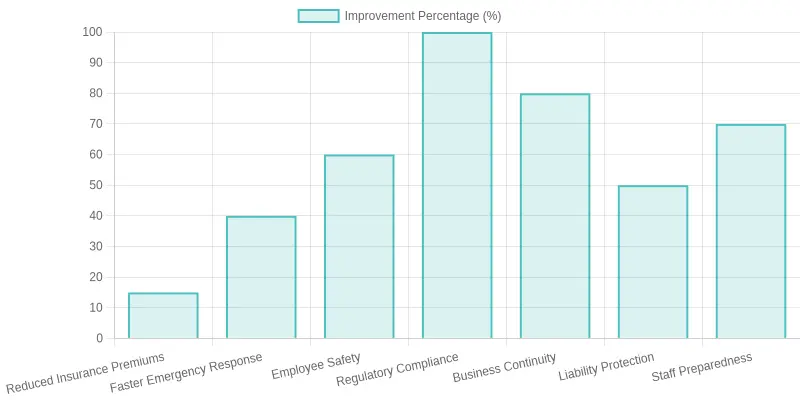
7 Compelling Benefits of a Fire Department Manual
-
Reduced Insurance Premiums – Insurance providers consistently reward businesses that demonstrate proactive fire risk management. A documented fire department manual showing clear safety protocols, inspection schedules, and employee training records can qualify your business for premium discounts of up to 15%. Many commercial insurers offer reduced rates when they see formalized fire prevention plans in place.
-
Faster Emergency Response – When every second counts, a fire department manual ensures that employees, managers, and first responders know exactly what to do. Clear evacuation routes, assembly points, and communication protocols eliminate confusion, slashing response times by up to 40% and significantly reducing property damage.
-
Employee Safety – Your team is your most valuable asset. A fire department manual provides step-by-step instructions for fire extinguisher use, evacuation procedures, and hazard identification. Businesses with documented safety manuals report up to 60% fewer fire-related injuries, creating a safer workplace and boosting employee confidence.
-
Regulatory Compliance – OSHA, NFPA, and local fire codes mandate that commercial properties maintain written fire prevention and emergency action plans. A fire department manual keeps you compliant with these regulations, helping you avoid costly fines, citations, and potential shutdowns. Non-compliance penalties can run into the thousands of dollars per violation.
-
Business Continuity – Fires don’t just damage property – they can shutter your operations for weeks or months. A fire department manual outlines business continuity strategies, including data backup procedures, temporary relocation plans, and inventory protection measures. Businesses with continuity plans recover 80% faster from fire-related disruptions.
-
Liability Protection – In the event of a fire-related incident, having a documented fire department manual demonstrates due diligence. It proves that your business took reasonable steps to prevent fires and protect occupants, which can be a critical defense in liability lawsuits and workers’ compensation claims, potentially reducing legal exposure by up to 50%.
-
Improved Staff Preparedness – A fire department manual serves as the foundation for regular fire drills and training sessions. When employees are trained on the manual’s contents, they become confident, capable responders. Studies show that businesses with regular fire training see a 70% improvement in staff readiness during actual emergencies.
The bottom line: A fire department manual isn’t just a regulatory checkbox – it’s a strategic business asset. From lower insurance costs to faster recovery times, the return on investment is undeniable. Business owners who take fire preparedness seriously protect not only their facilities but also their reputation, their workforce, and their financial future. When you’re ready to build or update your manual, check out our comprehensive fire department catalogs for resources and equipment lists, or browse our fire rescue truck equipment list to ensure your response tools are up to standard. Investing in preparedness today means securing your business for tomorrow.
The generated image can be viewed at: https://firetrucksinc.com/wp-content/uploads/2026/07/chart-fire-safety-checklist.webp
How to Develop an Effective Fire Department Manual for Your Business
A well-crafted fire safety manual is one of the most valuable investments you can make for your business. It protects lives, safeguards assets, and ensures regulatory compliance. Yet according to industry data, only 38% of businesses have a formal fire safety document in place. Think of your manual not as an expense, but as a strategic asset that can reduce fire-related losses by nearly 50%. Here is a step-by-step guide to building one that works.
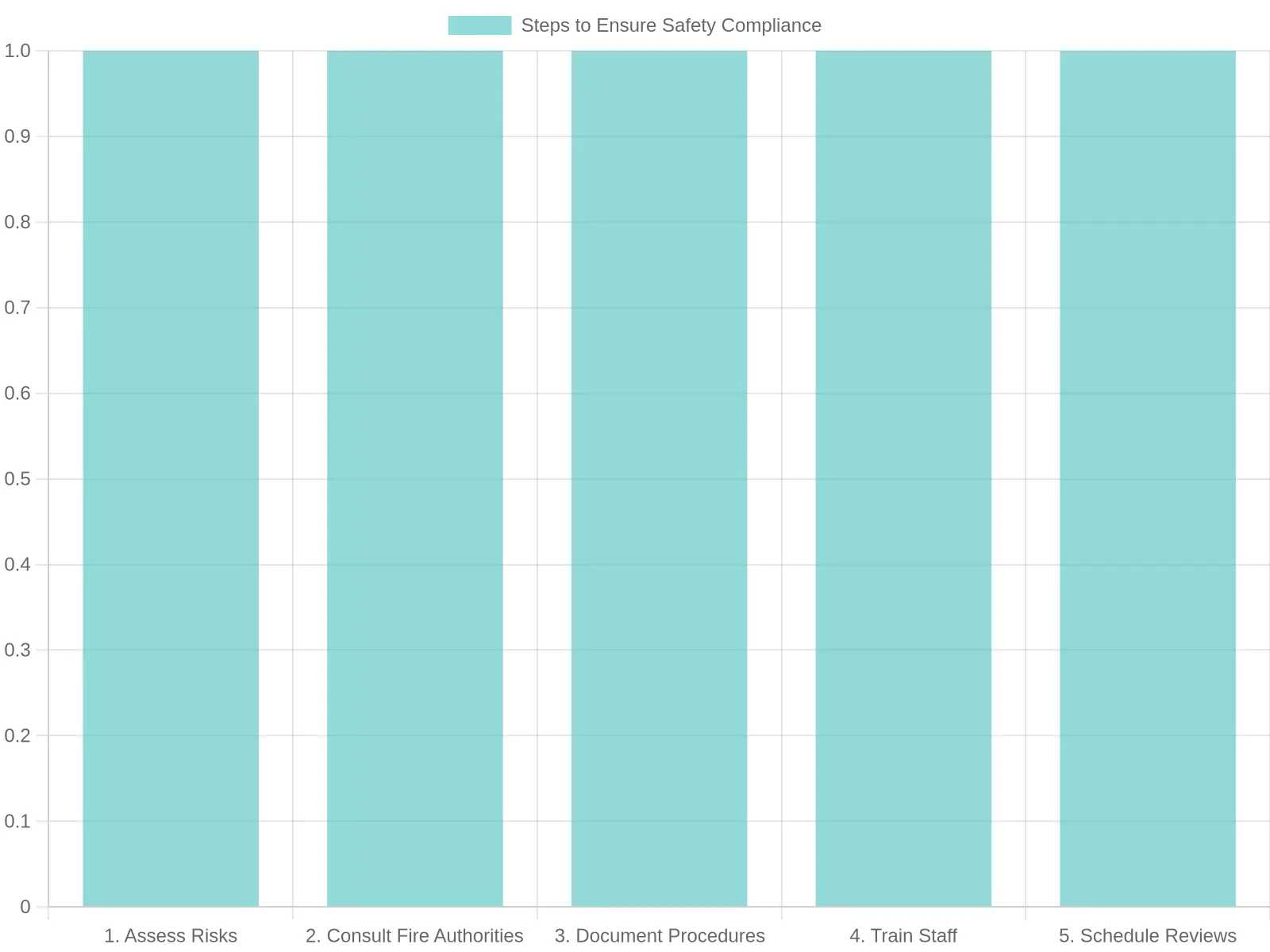
Step 1: Assess Your Unique Fire Risks
Start with a thorough evaluation of your facility. Walk through every area and ask: What could ignite? What fuels are present? Where are people most vulnerable?
- Identify flammable materials, electrical hazards, and storage risks.
- Map evacuation routes and note any bottlenecks.
- Review past incidents or near-misses for patterns.
Document everything. This risk profile becomes the foundation of your entire manual.
Step 2: Consult with Local Fire Authorities
Your local fire department knows your building type, local codes, and response capabilities better than anyone. Reach out early in the process.
- Schedule a site visit with the fire marshal.
- Ask about specific NFPA standards that apply to your industry.
- Request feedback on your proposed evacuation plans and suppression systems.
Building this relationship also gives you access to resources like fire department catalogs and training materials that can strengthen your business fire protection plan.
Step 3: Document Clear, Actionable Procedures
A manual is only useful if people can follow it under pressure. Write with clarity and brevity.
| Section | What to Include |
|---|---|
| Emergency Contacts | Fire department, building manager, utility shut-offs |
| Evacuation Routes | Floor plans with marked exits and assembly points |
| Fire Extinguisher Locations | Type, location, and usage instructions |
| Alarm Procedures | Who alerts occupants, who calls 911, who accounts for staff |
| Roles & Responsibilities | Fire warden, floor monitors, first-aid responders |
Use simple language. Add diagrams. Keep a digital and a printed copy accessible.
Step 4: Train Your Staff Thoroughly
A manual that sits on a shelf is worthless. Every employee needs to understand their role before an emergency happens.
- Conduct hands-on fire extinguisher training annually.
- Run evacuation drills at least twice per year.
- Test your alarm systems and communication protocols.
Consider partnering with equipment dealers who offer guidance on fire apparatus and safety tools that align with your documented procedures.
Step 5: Schedule Regular Reviews and Updates
Your business changes – and so do fire codes. Schedule a formal review of your fire safety manual at least once a year, or whenever you:
- Renovate or expand your facility.
- Introduce new equipment or hazardous materials.
- Receive a citation or experience a fire incident.
- See changes in local fire codes or NFPA standards.
A Final Word: Invest, Don’t Just Spend
Creating a fire department manual isn’t a one-time checkbox. It is an ongoing commitment to safety that pays dividends in peace of mind, lower insurance premiums, and – most importantly – saved lives. Every dollar and hour you put into building a robust business fire protection strategy is an investment in your company’s future.
Start today. Your employees, your customers, and your bottom line will thank you.
Essential Fire Safety Equipment Your Business Needs
Every fire department manual emphasizes that a comprehensive fire protection strategy begins with the right equipment. For business owners, understanding these requirements is not just about compliance-it’s about protecting lives and assets. Here is the critical business fire protection equipment every facility should have.
🔥 Fire Extinguishers: Types & Placement
Fire extinguishers are the first line of defense. The NFPA classifies them by fire type:
- Class A – ordinary combustibles like wood, paper, and cloth
- Class B – flammable liquids like gasoline, oil, and grease
- Class C – energized electrical equipment
- Class K – cooking oils and fats (essential for commercial kitchens)
Commercial fire codes typically require extinguishers placed within 75 feet of any point in a building. A multi-purpose ABC dry chemical extinguisher is the standard for general business areas, while CO₂ extinguishers are preferred near sensitive electronics and server rooms.
🌊 Sprinkler Systems
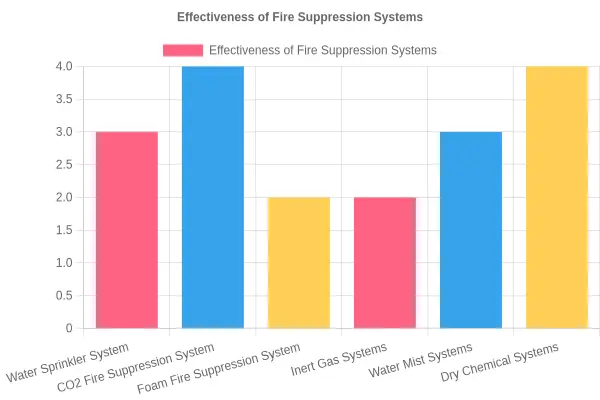
Automatic fire sprinkler systems are among the most effective fire department equipment investments a business can make. According to NFPA data, buildings equipped with sprinklers experience 82% fewer fire deaths and significantly less property damage. Over 40 million sprinkler heads are installed globally each year. Routine inspection and maintenance under NFPA 25 standards ensure these systems remain operational when needed most.
🔔 Smoke Detectors, Fire Alarms & Emergency Lighting
Smoke detectors provide early warning of fire, while interconnected fire alarm systems ensure building-wide notification for rapid evacuation. Emergency lighting is equally critical – it guides occupants to exits when visibility drops due to smoke or power failure. These components are non-negotiable in any business fire protection plan and must be tested regularly per local codes.
🛡️ Suppression Systems
Specialized suppression systems protect high-risk areas standard extinguishers cannot cover. Clean agent systems (like FM-200 or Novec 1230) safeguard server rooms and data centers without damaging electronics. Wet chemical suppression systems are required above commercial cooking equipment to handle grease fires safely.
Modern solutions from manufacturers like Zoomlion now integrate advanced suppression technologies into mobile fire apparatus, offering businesses elevated response capabilities – from high-altitude water towers delivering up to 42 meters of reach to foam-based systems ideal for industrial and chemical fire risks.
Every piece of equipment in your business fire protection strategy must be properly maintained, inspected, and documented in your fire department manual. To learn how advanced apparatus support these systems, explore our list of fire apparatus manufacturers and review the essential gear in our fire rescue truck equipment list.
How Zoomlion Supports Fire Safety Excellence
When it comes to protecting your business from fire hazards, the equipment you choose matters as much as the company behind it. Zoomlion Heavy Industry Science & Technology Co., Ltd., founded in 1992, has spent over three decades building a global reputation for reliability, innovation, and engineering excellence. As a dual-listed high-tech enterprise on both A-share and H-share stock markets, Zoomlion stands among the world’s leaders in construction and agricultural machinery – and increasingly, in advanced fire protection solutions.
Engineering Backed by World-Class R&D
Zoomlion’s strength lies in its massive investment in research and development. The company operates state-level enterprise technology centers and boasts thousands of patented technologies. This R&D engine directly feeds into their fire safety division, where every piece of equipment is designed with real-world emergency conditions in mind. Whether it’s a high-rise building fire or an industrial warehouse blaze, Zoomlion’s engineering team develops apparatus that delivers when it counts.
A Complete Lineup of Fire Protection Equipment
Zoomlion offers a comprehensive range of fire department equipment tailored for businesses of all sizes. Their fire truck lineup includes:
- Aerial Ladder Platforms – Models like the 60-meter aerial ladder fire truck provide unparalleled vertical reach for multi-story buildings, enabling firefighters to access upper floors quickly and safely.
- Fire Suppression Systems – Integrated foam and powder suppression solutions designed for industrial environments such as chemical plants, warehouses, and manufacturing facilities.
- Heavy-Duty Fire Trucks – Purpose-built chassis carrying high-capacity pumps and water tanks for sustained firefighting operations.
All Zoomlion apparatus undergo rigorous testing to meet international safety and performance standards, ensuring reliability when emergencies strike.
“Zoomlion’s mission is to deliver intelligent, high-performance equipment that empowers fire departments to save lives and protect property.”
Why Business Owners Trust Zoomlion
For business owners, partnering with a manufacturer that produces trusted fire department equipment means fewer compliance headaches and greater peace of mind. Zoomlion’s dual-listed status reflects financial stability and corporate transparency – two qualities you want in a long-term partner. Their global supply chain also means parts and service support are accessible, reducing downtime for your critical safety systems.
Additionally, Zoomlion is actively innovating in smart firefighting technology, integrating IoT sensors and real-time monitoring into their equipment. This allows businesses to track apparatus readiness, schedule preventive maintenance, and ensure their gear is always mission-ready.
A Partner for the Long Haul
From their founding in 1992 to their current status as a global machinery powerhouse, Zoomlion has demonstrated consistent growth and technological leadership. For businesses seeking a reliable partner in fire safety, Zoomlion offers the perfect blend of innovation, experience, and reliability. To explore how Zoomlion’s fire apparatus compare with other leading manufacturers, check out our comprehensive list of fire apparatus manufacturers and see what fits your operation best. You can also review our fire rescue truck equipment checklist to ensure your fleet is fully prepared for any emergency.
Conclusion: Your Fire Department Manual Is the Foundation of Safety and Compliance
A well-maintained fire department manual is far more than a binder on a shelf – it is the operational backbone of your organization’s fire safety program. As we’ve explored throughout this guide, this essential document ensures your business remains compliant with NFPA standards and local fire codes, provides clear protocols for emergency response, and serves as the cornerstone for training and preparedness.
The stakes could not be higher. According to FEMA, 40% of businesses never reopen after a disaster, and another 25% fail within one year. With the U.S. Small Business Administration reporting that one in four businesses that suffer a major disaster do not reopen at all, the importance of having a comprehensive fire prevention and response plan – anchored by a current, accurate manual – cannot be overstated.
Your fire department manual also plays a critical role in inspections, insurance compliance, and protecting your team. It demonstrates due diligence, reduces liability, and provides the clarity needed during high-stress emergency situations. Whether you operate a municipal fire department, an industrial facility, or a commercial business, this document keeps everyone aligned and accountable.
But having a manual is only part of the equation. You also need the right equipment and the right partners to back it up. That’s where expertise matters. From apparatus selection to maintenance and compliance support, working with professionals who understand firefighting technology inside and out makes all the difference. If you’re looking to evaluate your equipment needs, explore the latest fire apparatus options, or compare manufacturers, partnering with an experienced dealer ensures you’re making informed, safety-first decisions.
Don’t wait – contact us today to discuss your needs, request a quote, or learn more about how we can support your mission to protect lives and property.